

Vinyl Films vs Painted Walls – When it comes to giving your home or office a fresh, stylish, and durable look, the battle between vinyl films and painted walls has been going on for years. While paint has long been a go-to option, modern vinyl films are quickly becoming the smarter, longer-lasting choice. But why are more homeowners and businesses choosing vinyl over paint today? Let’s dive deep into the reasons why vinyl films last longer — and why they might just be the upgrade your space needs.
1. The Difference Between Vinyl Films and Paint
Before we compare durability, it’s essential to understand what sets the two apart.
- Painted walls involve applying liquid paint directly to the surface. While paint provides a solid color and smooth finish, it is exposed to dust, sunlight, moisture, and scratches over time.
- Vinyl films, on the other hand, are thin sheets of high-quality adhesive material that cover walls and surfaces. They come in various textures, designs, and finishes — from matte and glossy to wood, marble, and metallic effects — making them a versatile option for modern interiors.
Unlike paint, vinyl film adds an extra layer of protection to your walls, shielding them from everyday wear and tear.
2. Durability and Longevity
One of the most significant advantages of vinyl films is their long-lasting durability. While good-quality paint may last 3–5 years before fading or peeling, vinyl films can easily last up to 10 years or more with proper care.
Why Vinyl Lasts Longer:
- Scratch Resistance: Vinyl surfaces are resistant to minor scratches and scuffs that easily ruin paint.
- Moisture Protection: Paint can absorb humidity, leading to bubbles or cracks. Vinyl acts as a waterproof barrier.
- UV Resistance: Constant exposure to sunlight can fade paint colors, while vinyl films maintain their brightness and texture for years.
- Easy Maintenance: Vinyl doesn’t require frequent touch-ups or repainting. A simple wipe keeps it looking new.
In short, vinyl films are not only more durable but also require much less maintenance, saving both time and money in the long run.
3. Cost Efficiency Over Time
While vinyl installation may cost slightly more upfront than a standard paint job, the long-term savings are clear. Paint often needs repainting every few years, while vinyl lasts much longer without losing its charm.
Vinyl films also reduce repair costs because they are less likely to chip, crack, or stain. In commercial settings like offices or hotels, where wall damage is common, this durability makes vinyl an ideal choice.
Long-term cost comparison:
- Paint: Lower initial cost but higher maintenance and repainting frequency.
- Vinyl: Slightly higher initial cost but minimal maintenance and longer lifespan.
Over time, vinyl films easily win in terms of cost-effectiveness.
4. Easy Maintenance and Cleaning
Painted walls can stain or absorb dirt easily, especially in kitchens, hallways, and offices. Cleaning painted walls often leads to faded or patchy color areas.
Vinyl, however, makes maintenance effortless. Most vinyl films are wipe-clean, meaning you can simply use a damp cloth or mild detergent to remove dust, fingerprints, or stains without damaging the surface.
Vinyl’s Easy-Care Advantage:
- No need for expensive cleaning products.
- Resistant to moisture and mildew.
- Maintains color and shine even after years of use.
5. Stylish Designs and Versatility
Vinyl films offer limitless design possibilities. Whether you want a luxurious marble effect, modern matte finish, or a cozy wooden texture — vinyl can achieve it all. Paint, on the other hand, is limited by color options and finishes.
Where Vinyl Shines:
- Homes: Perfect for bedrooms, kitchens, and bathrooms where moisture and cleaning can be challenging.
- Offices: Adds a premium look to reception areas, meeting rooms, and workspaces without long downtime for painting.
- Commercial Spaces: Ideal for cafes, hotels, and retail stores needing quick transformations with minimal mess.
This combination of durability and design flexibility makes interior vinyl finishes for home and offices the top choice for modern interiors.
6. Environmental Impact
Vinyl films also have an edge when it comes to sustainability. Traditional paints often release volatile organic compounds (VOCs) — chemicals that can harm air quality and health. Many high-quality vinyl films today are eco-friendly and low in emissions, making them a safer choice for indoor environments.
Moreover, since vinyl films last longer, they reduce the frequency of reapplication — leading to less waste and fewer materials used over time.
7. Installation and Replacement
Painting can take several days, including drying and curing time, and often leaves behind a strong smell. Vinyl film installation is faster, cleaner, and odor-free. It requires no drying time, which means your space is ready for use almost immediately.
Even when it’s time for an update, removing or replacing vinyl is straightforward and doesn’t damage the wall underneath. This flexibility makes it ideal for rented spaces or businesses that frequently refresh their branding or décor.
8. Final Comparison: Vinyl Films vs Painted Walls
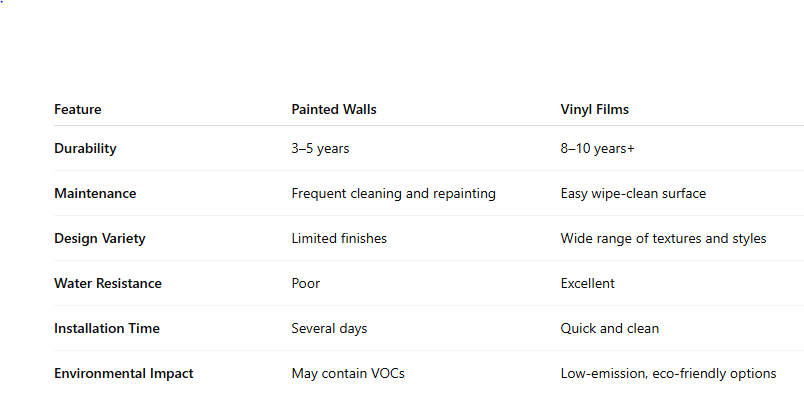
Conclusion:
If you’re looking to create a modern, elegant, and durable finish for your space, vinyl films are the way to go. They offer superior protection, vibrant design choices, and long-term savings that paint simply can’t match.
At TT Pacific, we believe in transforming spaces that not only look beautiful but also stand the test of time. Whether it’s your home or workplace, choosing vinyl films means investing in quality, durability, and lasting style.
Make the smarter choice — because when it comes to your walls, vinyl truly lasts longer.